

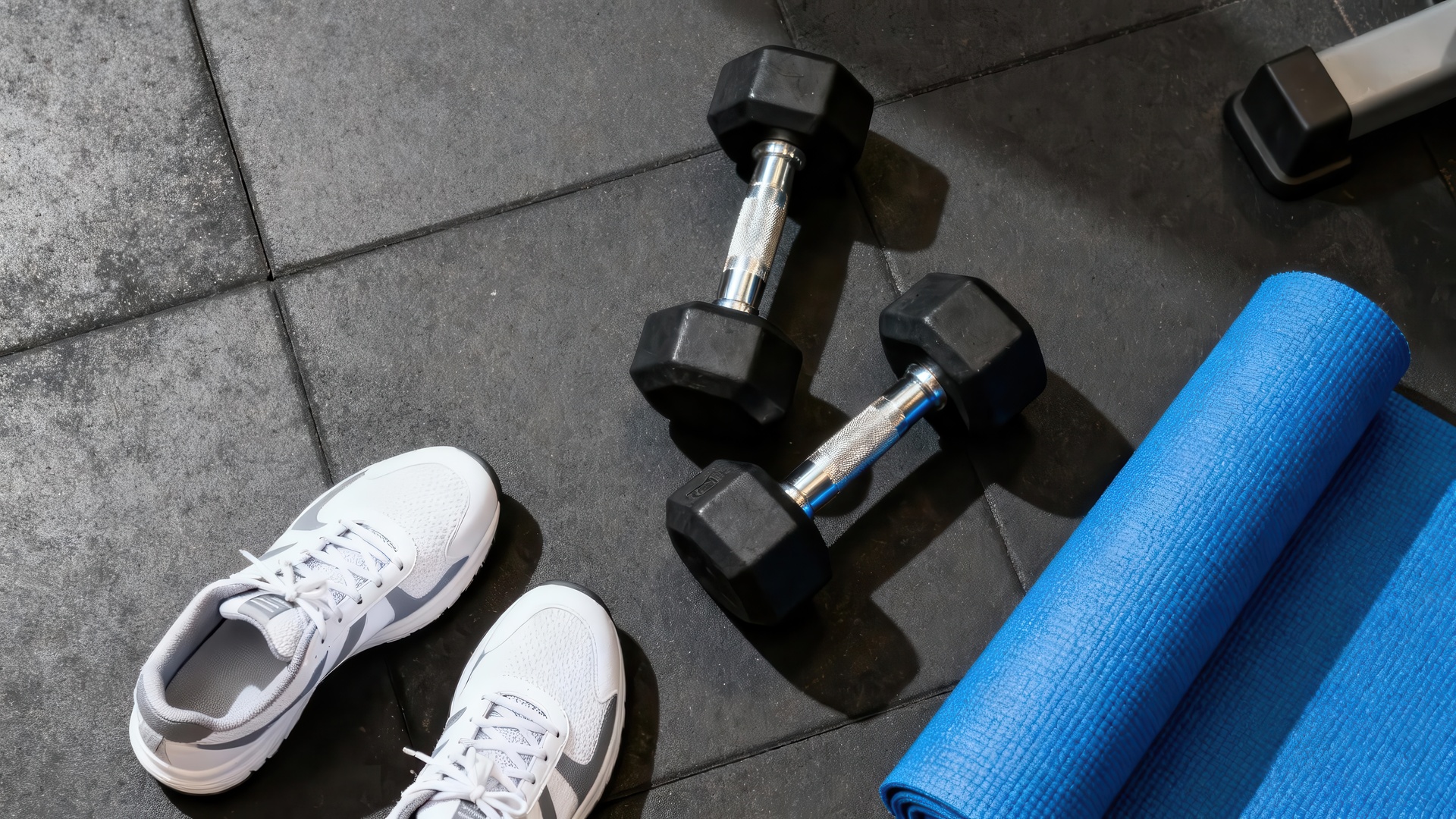
You have cleared out the spare bedroom. The squat rack is on order. The adjustable dumbbells are already sitting in the corner, and now you are staring at the bare subfloor wondering what to put under all of it. Everyone tells you to get rubber flooring. Nobody tells you that there are fundamentally different kinds of rubber flooring, and that the difference between them matters more than most people realise.
If you are setting up a home gym in Scarsdale, Greenwich, or anywhere across Westchester and Fairfield County, understanding the distinction between vulcanized and recycled rubber flooring is worth your time before you spend a dollar. The team at Carpet Trends works with homeowners on rubber and gym flooring regularly, and the question of which type to choose comes up constantly. Here is the honest breakdown.
What vulcanized rubber actually is
Vulcanization is a manufacturing process that uses heat and sulphur to chemically bond rubber molecules together, creating a denser, more uniform material. Virgin rubber that has been vulcanized is harder, more consistent in density, and significantly more resistant to compression over time. When you press your hand into a vulcanized rubber tile and release it, it springs back immediately and completely. That is the elasticity that makes it perform well under heavy, repeated impact.
The catch is cost. Vulcanized virgin rubber flooring sits at a higher price point, and that is not a surprise given the material and the manufacturing process behind it.
What recycled rubber actually is
Recycled rubber flooring is made primarily from reclaimed materials, most commonly shredded tyres. The rubber granules are bound together using polyurethane adhesives and compressed into rolls or tiles. The result is a functional, durable surface that is also an environmentally responsible choice. The recycled content can vary significantly between products and manufacturers, which is why quality is not uniform across the category.
Recycled rubber is softer underfoot than vulcanized rubber, which some people prefer for bodyweight training, stretching, and cardio work. It absorbs impact well and handles moderate weight training without issue. The off-gassing smell that recycled rubber products sometimes carry when new is worth factoring in, particularly for enclosed basement gym spaces. It does dissipate, but it can take several weeks.
Where each one earns its place
This is where the practical decision happens.
For heavy lifting zones, vulcanized rubber is the stronger call. If you are dropping loaded barbells, running a power cage, or working with iron plates, you need a floor that does not compress and degrade under repeated point-load impact. Recycled rubber can hold up to this, but vulcanized rubber does it with more consistency over a longer period.
For cardio and mixed-use spaces, recycled rubber is genuinely excellent. Treadmills, bikes, rowing machines, and functional training areas do not demand the same structural resistance as a dedicated lifting platform. Recycled rubber in these zones is practical, comfortable, and a more considered choice from an environmental standpoint.
For the whole room on a single budget, many homeowners end up doing exactly what commercial facilities do: using recycled rubber throughout the room and installing a vulcanized platform tile or mat specifically under the lifting area. It is a hybrid approach that puts the performance where it is actually needed without spending at the top end across the entire floor.
Thickness plays into this decision too, and it is more nuanced than simply choosing thicker for better performance. The rubber flooring thickness guide breaks this down well if you want to go deeper on that piece before finalising your plan.
The smell, the slip, and the subfloor
A few practical points that matter in a home gym context. Both rubber types offer excellent slip resistance, which is important not just for safety but for equipment stability. Neither will slide under a loaded rack the way a foam mat might.
On subfloor protection, rubber flooring in general earns its keep when it comes to shielding hardwood, concrete, or tile from the kind of repetitive mechanical stress that a gym creates. If your home gym sits above a finished living space, noise and vibration management is a real consideration, and both rubber types outperform every other flooring category in this area.
The subfloor type also affects what will install cleanly. Concrete basement floors handle both options well. Raised wood subfloors benefit from the shock absorption that thicker recycled rubber provides, reducing the stress on joists from dropped equipment.
The verdict
Neither type is universally superior. Vulcanized rubber is the performance choice for serious lifting environments. Recycled rubber is the smart, sustainable, versatile choice for most home gym configurations. Know what your space demands, and match the material to the use.
Contact our flooring experts at Carpet Trends to get started
Setting up a home gym is an investment worth doing right the first time. Whether you are leaning toward vulcanized rubber, recycled rubber, or a combination of both, the flooring experts at Carpet Trends can help you make a confident decision. Serving homeowners across Rye, Harrison, Larchmont, Bronxville, Greenwich, Darien, and throughout Westchester and Fairfield County, we bring decades of hands-on expertise to every project. Stop into our showrooms in Rye, NY or New Canaan, CT, or get in touch with our team to talk through your gym flooring needs.


