

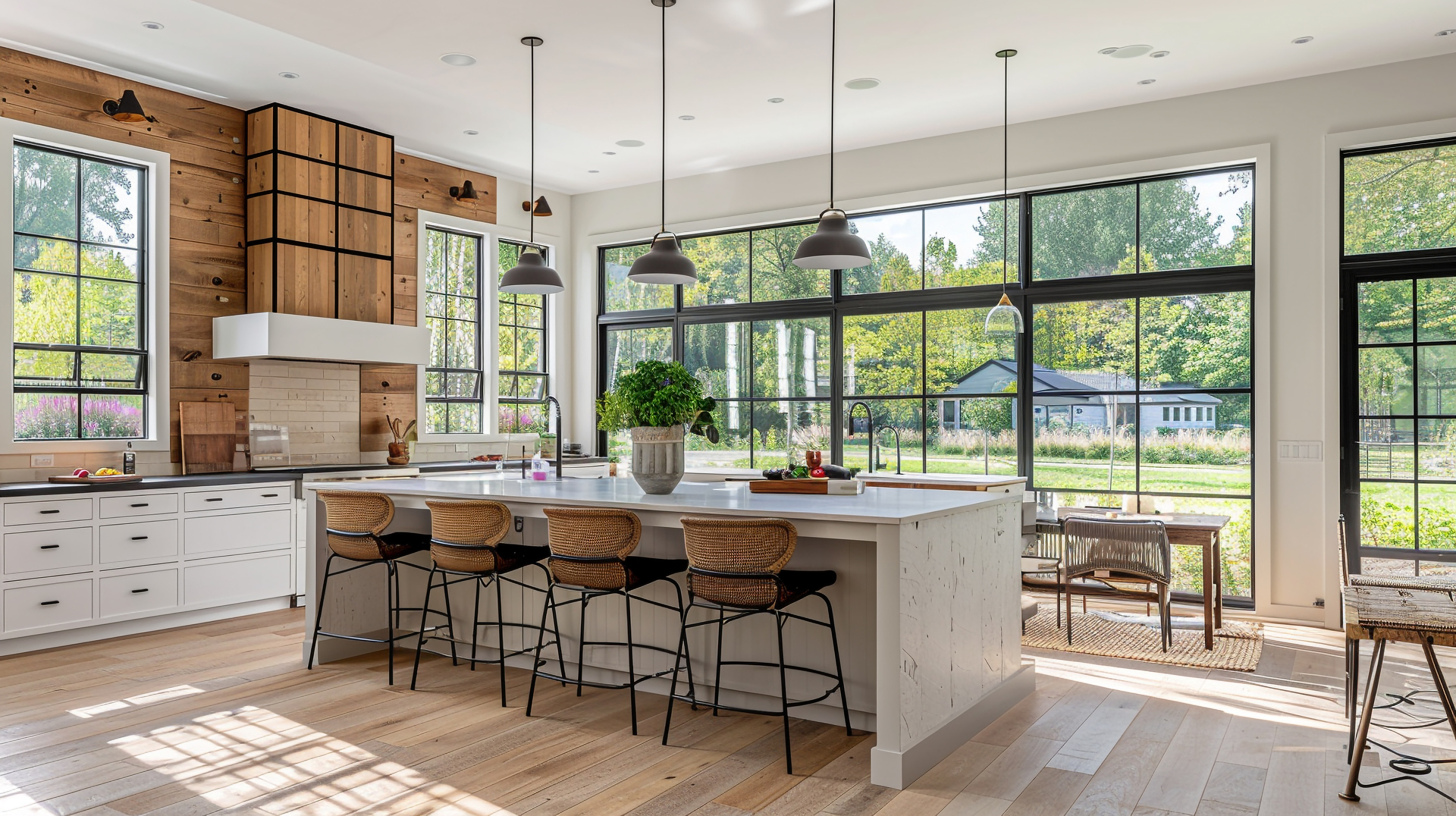
Hardwood flooring has long been admired for its warmth, elegance, and timeless appeal. Across Rye, Harrison, Larchmont, and Scarsdale, many homeowners are drawn to its charm—especially when they’re updating busy, well-loved spaces like the kitchen. But kitchens come with unique challenges: moisture, spills, foot traffic, and constant activity. This makes the decision to install hardwood a thoughtful one, where beauty and practicality must work hand in hand. Hardwood can absolutely thrive in a kitchen, but it’s important to understand the full picture before committing.
Kitchens and hardwood: a naturally inviting match
There’s something undeniably welcoming about hardwood in a kitchen. The grain, the color, the way natural light moves across the boards—it adds character and a sense of continuity with neighboring rooms. For open-concept homes in Rye and the surrounding areas, hardwood ties everything together beautifully. Instead of the kitchen feeling like a separate zone, it becomes part of a cohesive, flowing space.
Warmth underfoot and the comfort factor
One of hardwood’s greatest strengths is how comfortable it feels. Unlike tile, which can be cold and unforgiving, hardwood brings a gentle resilience underfoot—especially nice during long cooking sessions or early morning coffee rituals. Many homeowners appreciate this softness, especially in homes where the kitchen is truly the heart of daily living.
A look at design flexibility in kitchens
Hardwood works with nearly any design direction. Whether the kitchen leans traditional, transitional, or crisp and modern, hardwood adapts effortlessly. Lighter tones brighten compact spaces, while rich, darker species add dramatic warmth to larger kitchens. And because hardwood comes in so many finishes, plank widths, and textures, it offers long-term design freedom even as tastes evolve.
Where hardwood begins to face challenges
While hardwood offers beauty and comfort, kitchens do push it to its limits. The primary concern? Moisture. Kitchens inevitably see spills—water, sauces, oils—and if left unattended, these can seep into the wood and cause staining or warping. Humidity changes also influence how hardwood expands and contracts, making professional installation and ongoing care essential.
Spills, wear, and the realities of kitchen life
Daily foot traffic, dropped utensils, sliding chairs, and pet activity all impact hardwood more noticeably in a kitchen than in quieter rooms. Surface scratches and dents are normal over time. Fortunately, hardwood’s redeeming quality is its longevity: unlike many other materials, it can be refinished, giving it a renewed appearance rather than requiring a full replacement. Still, households with heavy, fast-paced kitchen use should consider whether this maintenance rhythm aligns with their lifestyle.
The impact of protective finishes
Modern finishes have made hardwood more durable than ever, especially in active kitchens. High-quality sealants add moisture resistance and help shield the surface from scratches. Matte and low-gloss finishes also hide everyday wear. That said, finishes are not invincible. They slow moisture absorption but don’t eliminate the risk, so quick cleanup is key.
Considering engineered hardwood for kitchen projects
Engineered hardwood has become a popular choice for kitchen installations because it handles temperature and moisture changes better than solid hardwood. Its layered construction creates stability, reducing the risk of movement or cupping. For homeowners who want the natural look of wood with added resilience, engineered hardwood often becomes the ideal middle ground.
Budget expectations and long-term value
Hardwood is a long-term investment. While the initial cost is higher than some alternatives, its ability to be refinished gives it decades of life. Many Westchester and Fairfield County homeowners find that hardwood in kitchens enhances resale appeal, especially when the flooring creates cohesion throughout adjacent rooms. The value isn’t just in appearance—it’s in the lasting quality and the craftsmanship behind a well-installed hardwood floor.
When hardwood is the right choice—and when it isn’t
Hardwood is a wonderful fit for kitchens where homeowners prioritize visual warmth, want their flooring to flow seamlessly into other rooms, and are committed to occasional refinishing and routine care. It’s not the best match for kitchens prone to heavy moisture, delayed cleanup, or environments where spills are constant and unavoidable. Families who want a carefree, no-maintenance surface may prefer tile or luxury vinyl. Those who love the unmistakable character of wood—and are comfortable with the responsibility that comes with it—will find hardwood deeply rewarding in a kitchen setting.
A helpful way to think about the decision
Choosing hardwood for a kitchen is less about perfection and more about priorities. Every flooring material carries trade-offs. Hardwood offers beauty, comfort, longevity, and home value, while asking for attentive care and thoughtful installation. When homeowners understand this balance, the decision becomes much clearer and far more satisfying.
A simple next step for turning kitchen flooring plans into reality
Carpet Trends has guided Westchester and Fairfield County homeowners through thoughtful flooring decisions since 1956. For kitchen hardwood projects—from selection to expert installation—our seasoned estimators and skilled mechanics deliver craftsmanship rooted in decades of experience. Visit our Rye showroom or reach out to schedule guidance from our flooring experts. We’re here to help every step of the way.


