

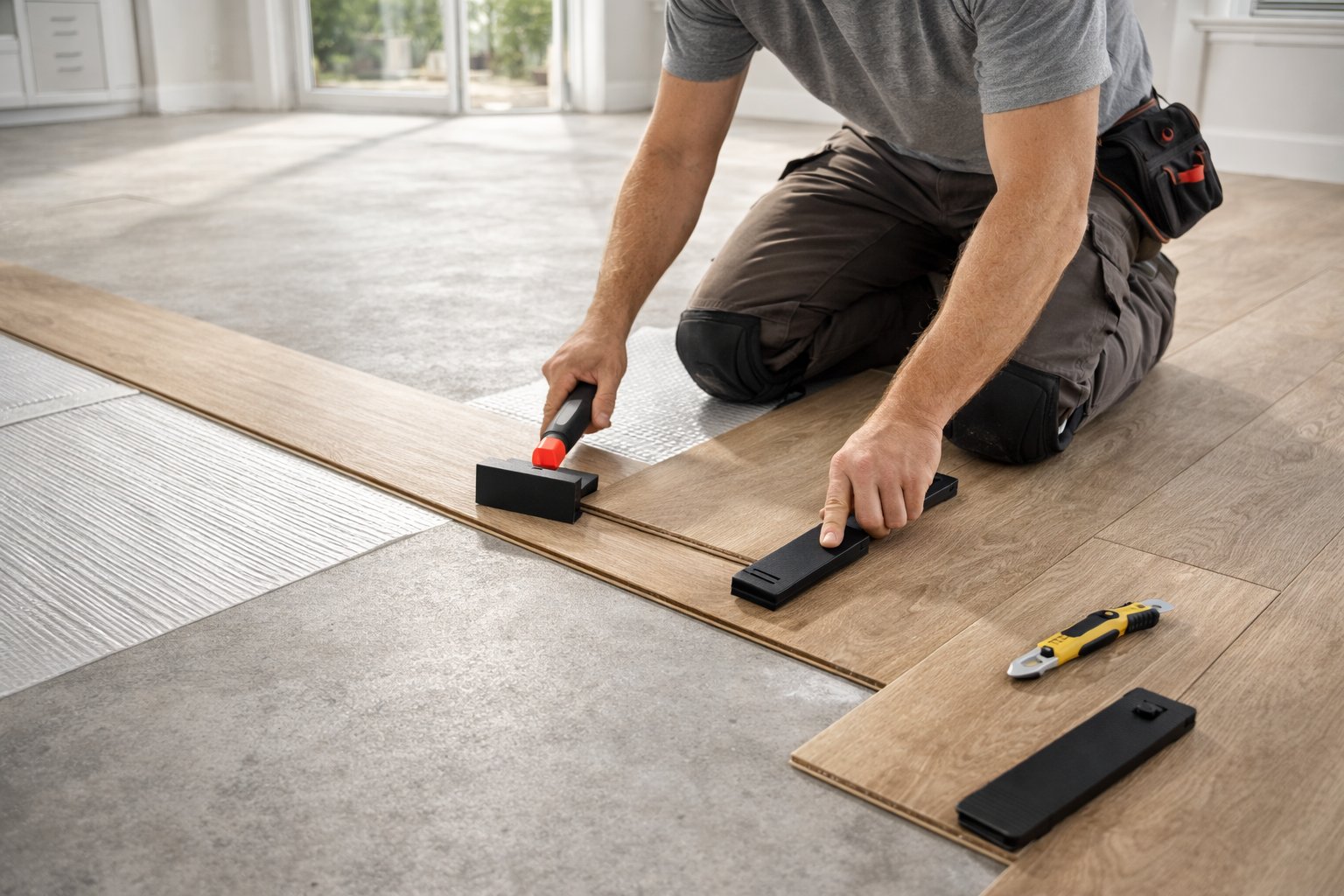
Installing luxury vinyl flooring over a concrete slab is one of the most common—and most misunderstood—flooring projects in modern homes. Concrete is durable and stable, but it also brings moisture, temperature shifts, and surface imperfections that can quickly turn a vinyl installation into a problem if shortcuts are taken. When done correctly, luxury vinyl delivers a quiet, comfortable, and long-lasting floor that performs beautifully over concrete. When done wrong, issues like plank separation, hollow sounds, or premature wear often follow.
With decades of hands-on experience installing flooring over concrete slabs in homes throughout Rye, New Canaan, and surrounding areas, the focus here is on what truly matters—not just the product, but the preparation and installation approach that ensures the floor performs the way it should.
Why concrete slabs require extra attention
Concrete may look solid and smooth, but it is rarely ready for vinyl straight out of the gate. Slabs can hold residual moisture, even years after curing. Small dips, ridges, and hairline cracks that seem insignificant can telegraph through vinyl planks over time. Temperature differences between above-grade and below-grade slabs also affect how vinyl expands and contracts.
Luxury vinyl is flexible by design. That flexibility is part of its comfort and resilience, but it also means the subfloor beneath must be properly addressed before installation begins.
Checking moisture before anything else
Moisture testing is not optional—it is essential. Concrete naturally releases moisture vapor, and excess moisture is one of the leading causes of vinyl flooring failure.
Professional installers use calibrated moisture tests to determine whether the slab is within manufacturer-approved limits. If readings are too high, solutions such as moisture-mitigation coatings or specialized underlayments are used before any flooring goes down. Skipping this step can void warranties and lead to adhesive breakdown or plank movement later on.
Preparing the slab the right way
A clean slab is only the starting point. Old adhesives, paint, drywall compound, or sealers must be fully removed. Even small residues can prevent vinyl from laying flat or bonding correctly.
Leveling is equally critical. Concrete does not need to be perfectly smooth, but it does need to be flat within industry tolerances. Low spots are filled with self-leveling compounds, and high spots are mechanically ground down. This step is often where rushed installations fail, as unevenness beneath vinyl becomes more noticeable with time and foot traffic.
Choosing the right luxury vinyl for concrete installations
Not all luxury vinyl products behave the same over concrete. Thicker planks with rigid cores tend to perform better on slabs, especially in areas with temperature fluctuations. Attached padding can help with sound reduction, but it does not replace proper subfloor prep.
For glue-down vinyl, slab preparation becomes even more critical, as the adhesive bond depends entirely on surface condition and moisture control. Floating click-lock vinyl offers flexibility and easier future replacement, but still requires a well-prepared base to avoid movement and noise.
Installation methods that make a difference
The installation method should match both the product and the space. Floating installations allow the floor to expand and contract naturally, making them ideal for many residential slab applications. Proper expansion gaps around the perimeter are essential and should never be skipped or hidden under tight trim.
Glue-down installations are often chosen for large open areas or commercial-style layouts. When done correctly, they provide excellent stability and a seamless look, but they demand meticulous slab prep and precise adhesive application.
In both cases, room acclimation matters. Vinyl should be allowed to adjust to the home’s temperature before installation begins, reducing the risk of post-install movement.
Common mistakes that shorten floor life
One of the biggest mistakes is assuming concrete is “dry enough” without testing. Another is relying on underlayment to hide slab imperfections. Underlayment enhances comfort—it does not fix uneven concrete.
Improper transitions between rooms, ignoring expansion requirements, or installing over active cracks without proper treatment can also compromise long-term performance. These details may not show up immediately, but they often surface months or years later.
Long-term performance depends on the unseen work
Luxury vinyl flooring is often praised for its durability and ease of maintenance, but its performance over concrete depends heavily on what happens before the first plank is installed. When moisture, flatness, and installation methods are handled correctly, vinyl over concrete can look and feel exceptional for years.
This is where experience matters. Understanding how concrete behaves—and how vinyl responds to it—separates a floor that simply looks good on day one from one that continues to perform under daily life.
Bringing it all together
Installing luxury vinyl flooring over a concrete slab is absolutely the right choice for many homes, but it is not a one-step process. Proper testing, preparation, product selection, and installation techniques work together to create a finished floor that is quiet, stable, and built to last. Cutting corners at any stage often leads to issues that could have been avoided from the start.
At Carpet Trends, we’ve been installing luxury vinyl flooring over concrete slabs since 1956. From moisture testing to precision installation, our team brings old-world craftsmanship and modern expertise to every project. Visit our Rye, NY showroom or our New Canaan, CT location to explore luxury vinyl options and schedule a professional installation done the right way.


