

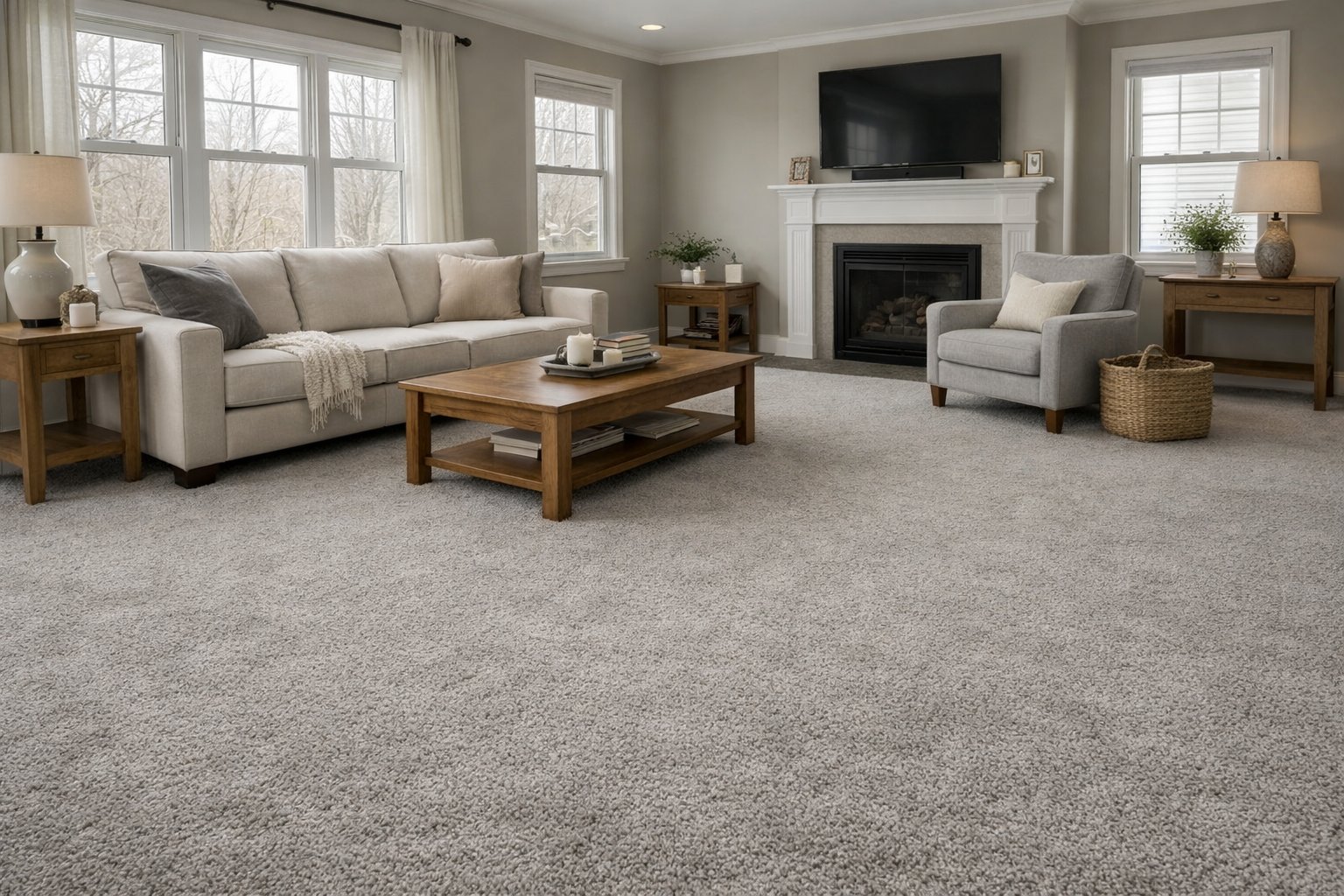
Choosing carpet for a Connecticut home involves more than color and texture. What sits beneath the carpet plays an equally important role in comfort, warmth, and noise control. Carpet padding thickness directly impacts how a room feels underfoot and how well it performs through New England’s seasonal shifts. From chilly winter mornings to active households with kids and pets, the right padding can make a noticeable difference.
Understanding how thickness and density work together helps ensure a quieter, warmer home without compromising durability.
What carpet padding actually does
Carpet padding acts as a cushion between the carpet and the subfloor. It absorbs impact, reduces wear on carpet fibers, and enhances overall comfort. When properly selected, padding:
Improves insulation
Reduces sound transmission
Extends carpet life
Creates a softer, more supportive feel
When exploring different styles of carpet flooring, it’s important to consider padding as part of the full flooring system rather than an optional add-on.
Thickness versus density explained clearly
Thickness is typically measured in fractions of an inch, such as 7/16", 1/2", or 5/8". Density refers to how firm and supportive the pad is for its thickness. Many assume thicker automatically means better—but that isn’t always true.
A very thick, low-density pad can feel spongy and unstable. Furniture may sink, and carpet fibers can flex too much, leading to premature wear. A slightly thinner pad with higher density often performs better in high-traffic spaces because it provides firmer support.
In most Connecticut homes:
Bedrooms and low-traffic living rooms benefit from thicker, high-density padding for comfort and warmth.
Hallways and stairs perform better with moderate thickness and higher density for stability.
Family rooms need a balance of cushioning and resilience.
The key is matching the pad to the function of the room.
Why padding makes homes warmer in Connecticut
Cold subfloors are common in Northeast homes, especially those built over basements or slabs. Carpet padding adds an insulating layer that traps air and slows heat transfer. While it isn’t a replacement for structural insulation, it significantly reduces the “cold floor” effect.
Thicker padding with proper density enhances thermal comfort, making rooms feel warmer and more inviting during long Connecticut winters. That added warmth also helps maintain a consistent interior feel throughout seasonal changes.
Sound control for multi-level homes
Noise reduction is another major benefit of proper padding thickness. Carpet alone absorbs some sound, but padding amplifies that effect. Impact noises—like footsteps, dropped items, or moving furniture—are softened before they reach the subfloor.
In multi-story homes, this can dramatically reduce noise transfer between floors. In single-story homes with open layouts, padding helps create a quieter, more peaceful atmosphere overall.
Matching padding to lifestyle needs
Every household uses spaces differently. Choosing the right padding thickness depends on how a room functions.
Active households benefit from firmer, durable pads that resist compression.
Bedrooms prioritize comfort and warmth.
Home offices benefit from balanced support to prevent excessive chair indentation.
Finished basements often require padding designed to help manage moisture conditions.
Proper installation also plays a critical role. Even the best padding won’t perform well if it’s improperly fitted or incompatible with the carpet style selected.
Common carpet padding materials
Several materials are commonly used in carpet padding:
Rebond foam: Widely used and versatile.
Prime foam: Higher quality with improved longevity.
Rubber: Excellent density and durability.
Fiber pads: Provide a firm, supportive feel.
Each material offers different performance characteristics. Thickness alone does not determine comfort—material composition and density matter just as much.
Protecting carpet longevity
Incorrect padding can shorten the life of even premium carpet. Too much softness can stress seams and backing. Too little cushioning can cause fibers to crush more quickly. That’s why manufacturer guidelines should always be considered, especially when reviewing warranties and long-term maintenance.
Routine upkeep also supports performance. Following proper carpet care and maintenance information ensures both carpet and padding continue delivering warmth and quiet comfort over time.
Finding the right balance for lasting comfort
Carpet padding thickness is about balance—not extremes. Connecticut homes benefit from thoughtful selections that consider insulation, sound absorption, durability, and lifestyle demands. When thickness and density are properly matched to the space, the result is a noticeably warmer, quieter, and more comfortable home.
For guidance tailored to specific rooms and household needs, connect with our team through our contact us page. With decades of flooring expertise and deep knowledge of how carpet systems perform in Connecticut homes, we help homeowners select padding and carpet combinations that deliver lasting comfort and peace of mind.


