

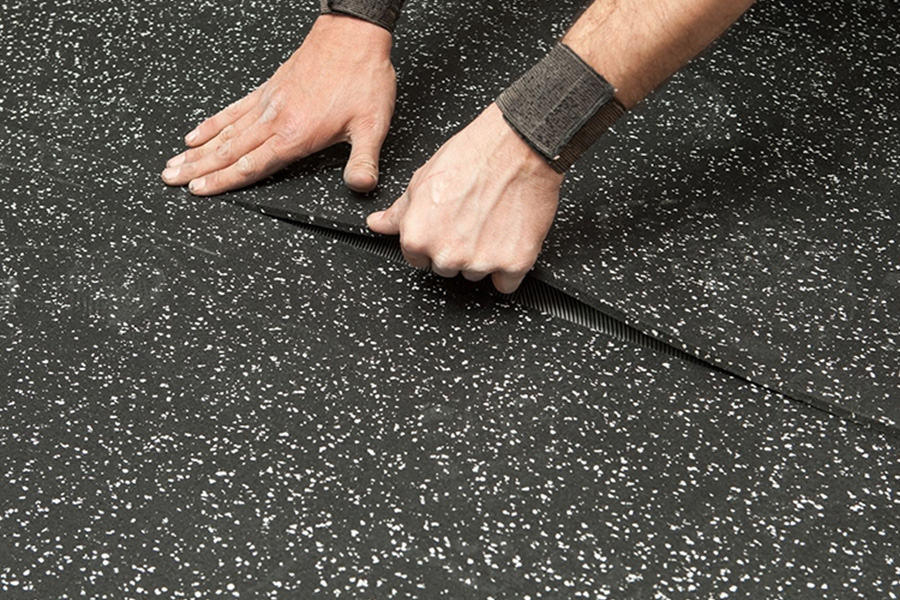
Rubber flooring plays a quiet but critical role in how a gym performs day after day. It absorbs impact, reduces noise, and protects both equipment and subfloors. One of the most important decisions comes down to thickness, especially when choosing between 8mm and 3/8 inch options.
At Carpet Trends, planning for gym flooring across Rye, New Canaan, and surrounding areas always starts with understanding how the space will actually be used. The right thickness depends less on appearance and more on how much stress the floor will need to handle.
Why thickness matters in gym flooring
Rubber flooring thickness directly affects durability, shock absorption, and overall performance. A thinner floor may feel firm and stable, while a thicker floor offers more cushioning and protection.
When exploring rubber gym flooring, it becomes clear that thickness is not a one size fits all decision. It should match the type of workouts, equipment weight, and frequency of use.
Choosing correctly helps extend the life of both the flooring and the equipment placed on top of it.
Breaking down 8mm vs 3/8 inch
At first glance, the difference between 8mm and 3/8 inch may seem small, but it can noticeably change how the floor performs in real conditions.
Where 8mm rubber flooring works best
8mm rubber flooring offers a firm and stable surface. It is often used in areas where heavy impact is limited and where balance and traction are more important than cushioning.
This thickness works well in spaces focused on cardio equipment, stretching zones, or lighter strength training setups.
Where 3/8 inch rubber flooring stands out
3/8 inch rubber flooring provides additional thickness and better shock absorption. It helps reduce stress on joints and offers more protection against dropped weights.
This makes it a stronger choice for free weight areas, functional training zones, and spaces where higher impact activities take place.
For installations that need to match flooring thickness with equipment and usage, commercial flooring installation ensures the right balance between durability and performance.
Choosing the right thickness for each gym space
Different areas within the same gym may benefit from different thickness levels. Instead of using one option throughout, many layouts combine both for better results.
- Use 8mm flooring in cardio zones where machines stay in place and impact is minimal
- Choose 3/8 inch flooring in free weight areas to handle dropped equipment
- Consider thicker flooring in multi use zones where both strength and movement overlap
- Match flooring to equipment weight and frequency of use rather than appearance
Performance over time
Rubber flooring should maintain its structure and performance even after repeated use. Thicker options tend to handle long term impact better, especially in high traffic or high intensity environments.
At the same time, thinner flooring can perform well when used in the right setting. The key is not choosing the thickest option everywhere, but choosing the right thickness for each zone.
Proper preparation also plays a role. A clean, level surface allows rubber flooring to sit evenly and perform consistently over time.
For spaces that require surface prep or adjustments before installation, flooring repair services help create the right base.
Find the right rubber flooring thickness for your gym
Every gym has its own rhythm, and the flooring should support it from the ground up. Get in touch with our team to choose the right rubber flooring thickness for each area and build a setup that performs the way it should.


